 |
| Indian Railway – Loo Experience |
As a seasoned travel traveler, here are my observation and suggestion to railway folks.
Every time I travel by Kochu Veli Express from Bangalore to Trivandrum, one factor remains same – strong stench from the loo. It’s a battle of human senses – visual, sensory and olfactory.
Here’s my case diary – Most times people are careless on how they use the toilet. These commuters leave water splashed all over the commode and on the floor. The unever railway toilet floor compounds to this water problem. In other words, water stay as puddles on the uneven toilet floor.
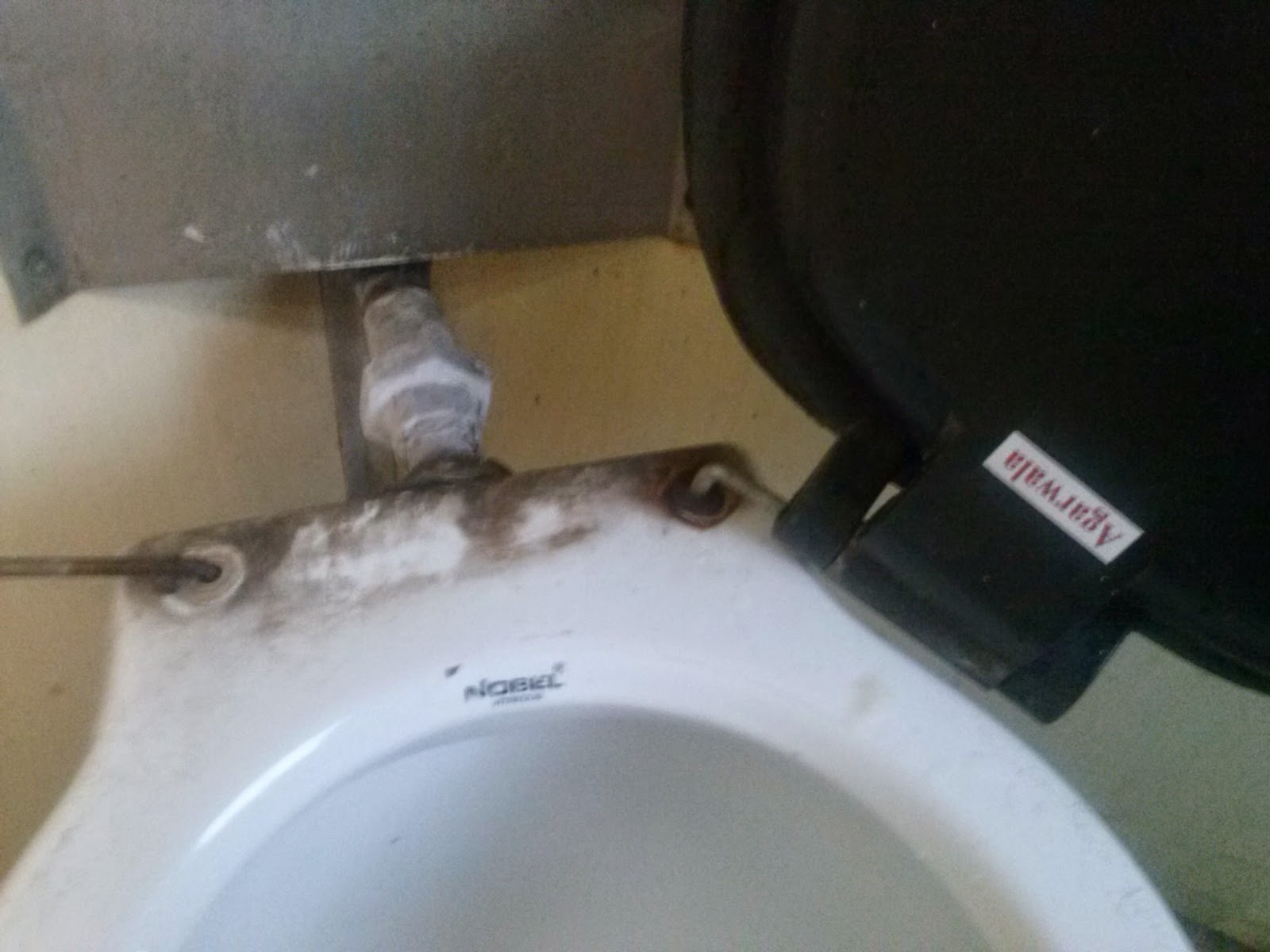
There’s another problem with western toilet in railway bogey. I’ve found most commodes do not have toilet seat or it’s partially detached from the commode. So, what happens while you’re using the loo. The rocking and jerking movement of the train makes you slide from the commode seat.
Cleanliness Factor – Railway Loo
We have two problem in hand – one is the way loo is used by the commuter and second is the durability of the fitting used inside the loo. So, who is to be blamed? Is it the user or provider? (railway)?I bet it’s both.
On the part of railway authorities, they have to improve the sturdiness of bolts, nuts and use high-grade fittings to fit the Indian arse. Moreover, all fitting should be tested and retested or feedback should be taken.
Here are few questions to the staff, managers and testers working in the technical wing of Indian railway.
- Are you guys testing each gadget, each knob before it is fixed in a bogey?
- Why are some sharp objects used?
- What kind of testing is done? What is the standard that is followed? Can you share your research on a blog? We travelers and railway fans are curious to know the inside story.
- Do you compare the items used with similar product used in other trains across the world?
- Have you taken spy shot of each railway coach across the world. Think you guys should dedicate one 1 TB of pics and videos taken from all the railway coaches across the world. I bet there would be lot of learning from this experiment. If there’s no one in railway department for this experiment, then sponsor me. I will be more than happy to go bag-packing and travelling on all the trains across the world. What say, net savvy and proactive railway minister, Mr Prabhu? 🙂
- How do you test the durability of each gadget?
- Why is the loo floor always uneven? Often the water collects at the base of the commode. Just imagine the hygiene problem it can cause!
Case of Broken Toilet Seat
In the case of broken toilet seats, the culprit is out in the open. It’s the thin metal fixture used to fix toilet the seat to the commode.
I wonder if they ever thought that this thin metal could withstand the big Indian arse!
7 Point Suggestions to Indian Railway
1) Use high quality, sturdy piece of metal. Harness it using strong bolts and with rubber bushes.
2) Use good quality durable plastic seat cover.
3) Finally, test, test and test on many big Indian arse.
4) Appoint me or any other person to take pics of other railway coaches ( From Japan to Peru). Use these pics for leaning, training and copying
5) Start a blog to share the your story. I bet your organization have many to share. Form safety to opening new facilities ( create a digital marketing team)
6) Appoint an all-rounder person for each train. This person will be in charge of cleaning, tightening bots, to adjusting a/c or fixing a broken latch or even problem first-aid to travelers.
7) Fix automatic scent dispenser at least in 3A coaches
( Earlier post on Garib Rath fiasco)
What do you say, the engineering department of Indian Railways? Can it be done?
If this item is procured from third-party vendors, then provide technical specification and standard to be followed. With a little care, quality check, you can give us a better travel experience.
From a die hard Indian Railway Fan!
 Flossy Ideas, Meetups and Views